

Engineering insights from the Atypical Tech team.
Articles
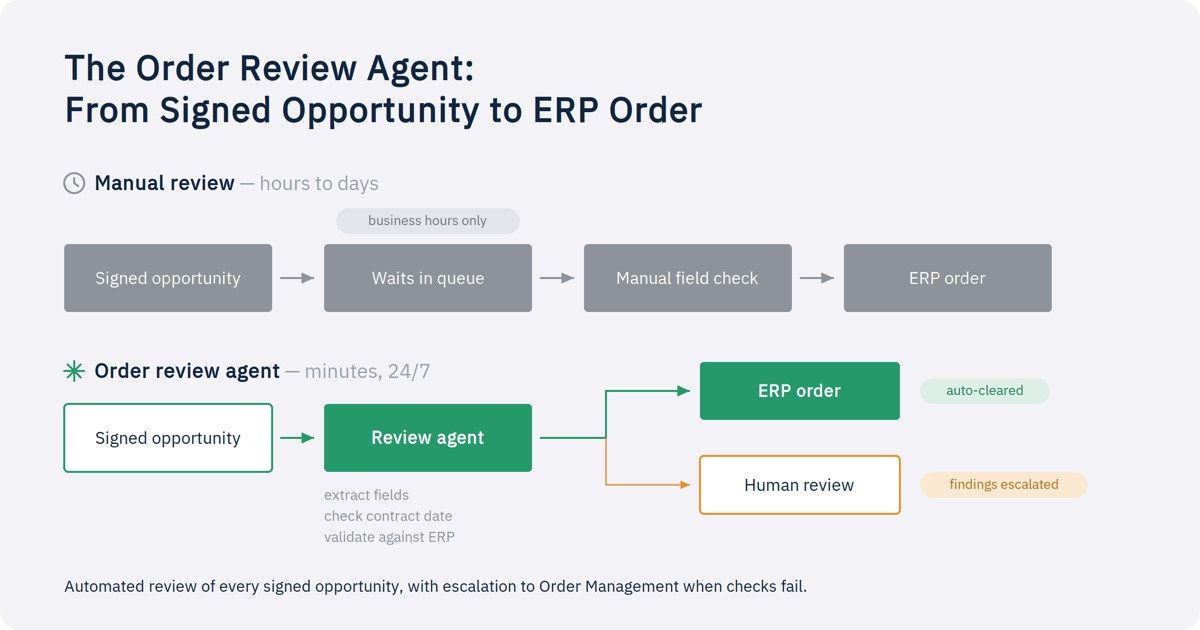
The Order Review Agent: Automating Signed-Opportunity Review Between CRM and ERP
An AI agent reviews every signed opportunity continuously — field checks, contract-versus-system dates, ERP referential integrity — and escalates only real findings.
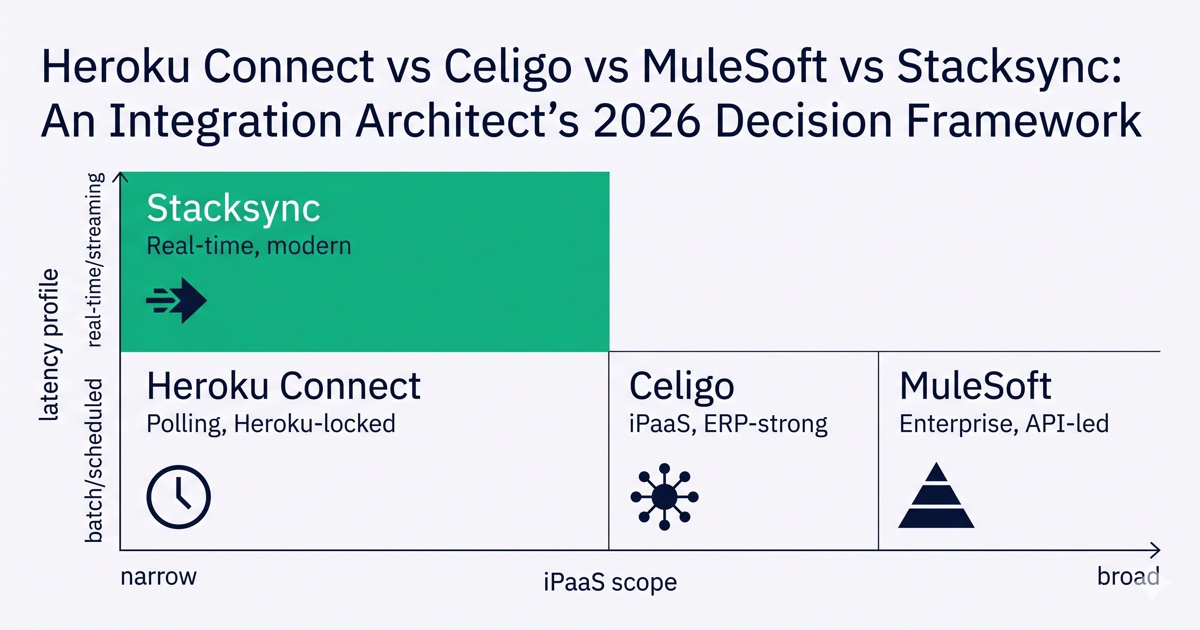
Heroku Connect vs Celigo vs MuleSoft vs Stacksync: An Integration Architect's 2026 Decision Framework
Heroku Connect vs Celigo vs MuleSoft vs Stacksync in 2026: each fits a different sync stack. Decision framework with capability and cost matrices.
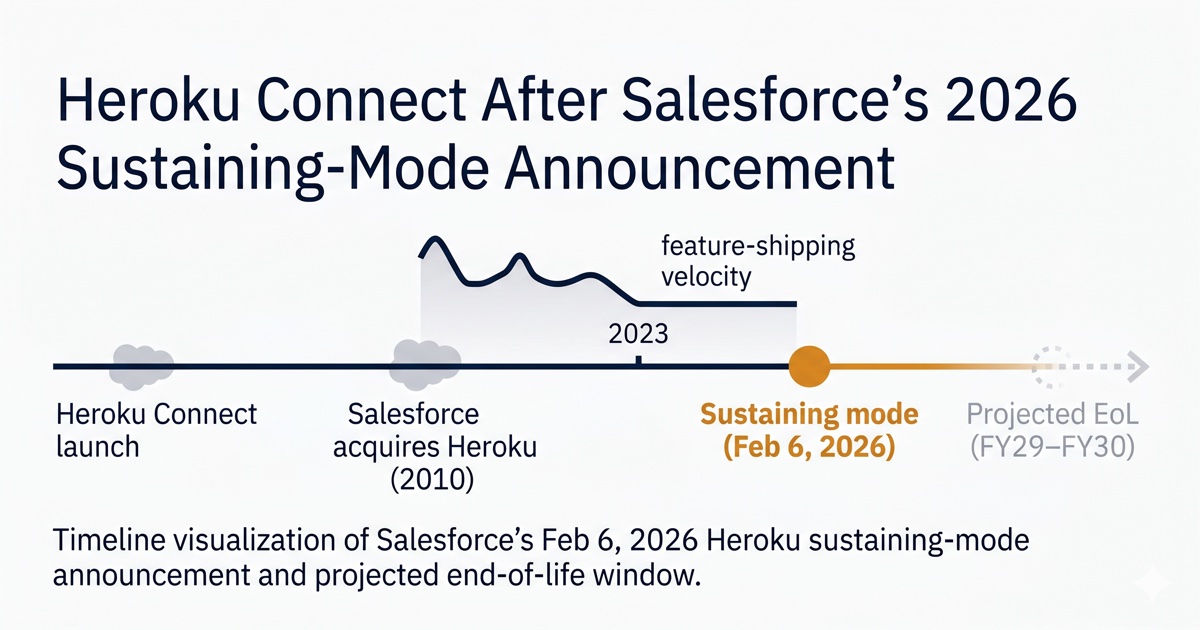
Heroku Connect After Salesforce's 2026 Sustaining-Mode: A Migration Guide for Salesforce Architects
Heroku is in sustaining mode after Salesforce's Feb 2026 announcement. What it means for Heroku Connect, the EOL timeline, and a 6-step migration plan.
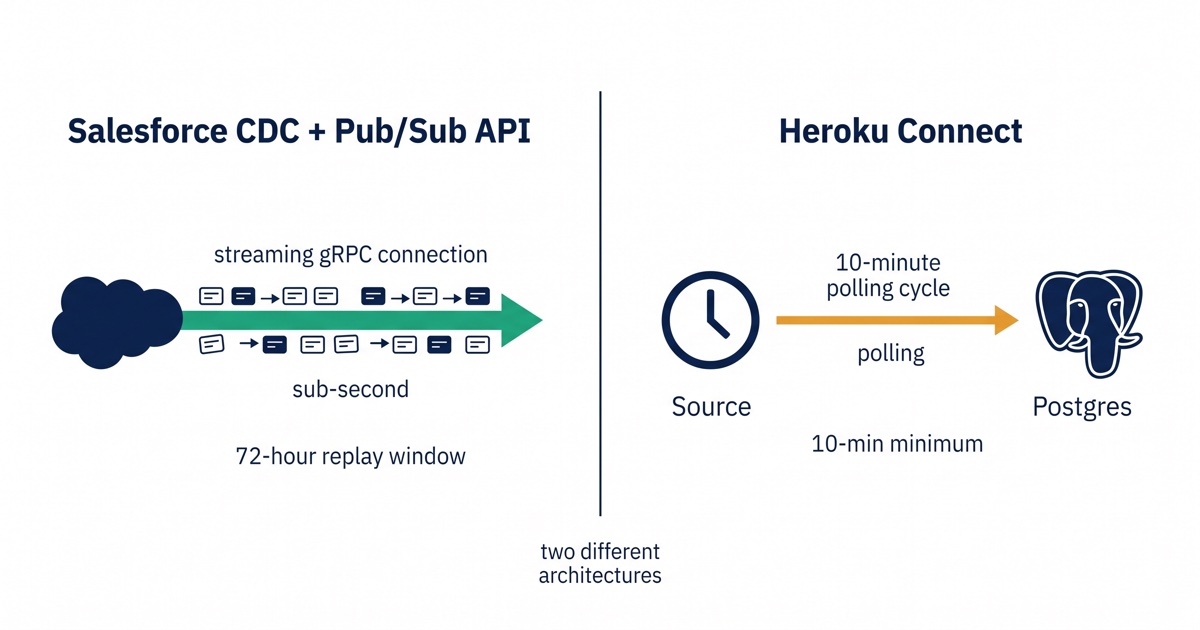
Salesforce Change Data Capture vs Heroku Connect: Why CDC Alone Isn't Enough for Real-Time Operational Sync
Salesforce CDC streams events; Heroku Connect maintains a Postgres replica. Architecture comparison and what production-grade CDC actually requires.
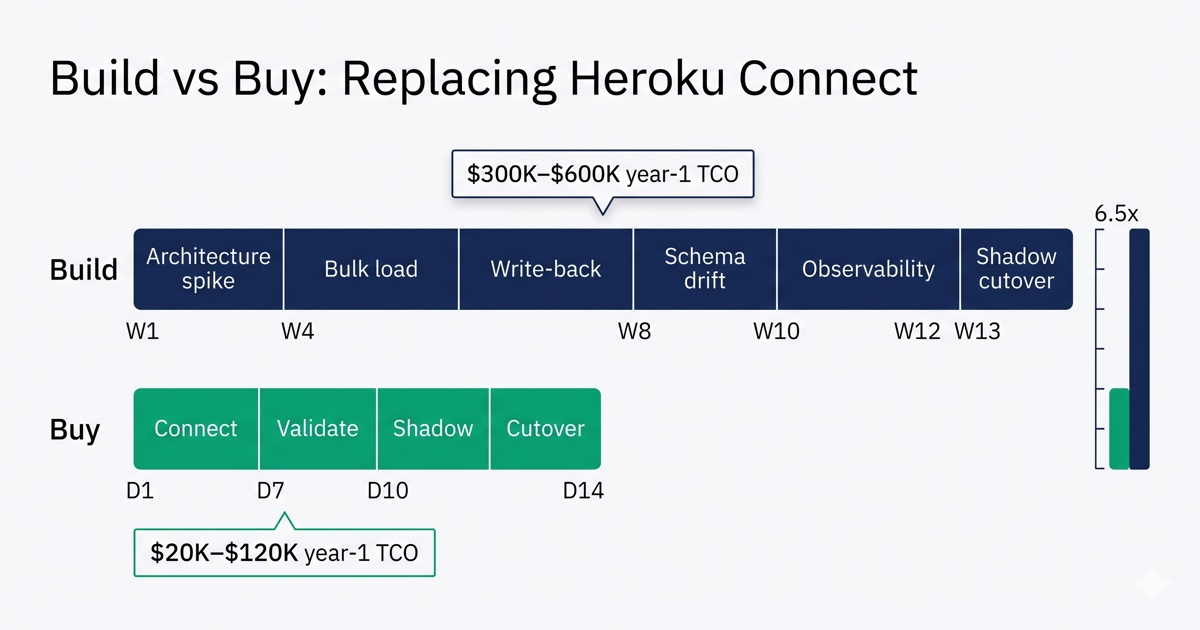
Build vs Buy: Replacing Heroku Connect with Debezium, Airbyte, or a Managed Sync Platform
With Heroku in sustaining mode, teams are weighing self-hosted CDC (Debezium, Airbyte) vs managed platforms. Costs, tradeoff, 90-day vs 14-day timelines.
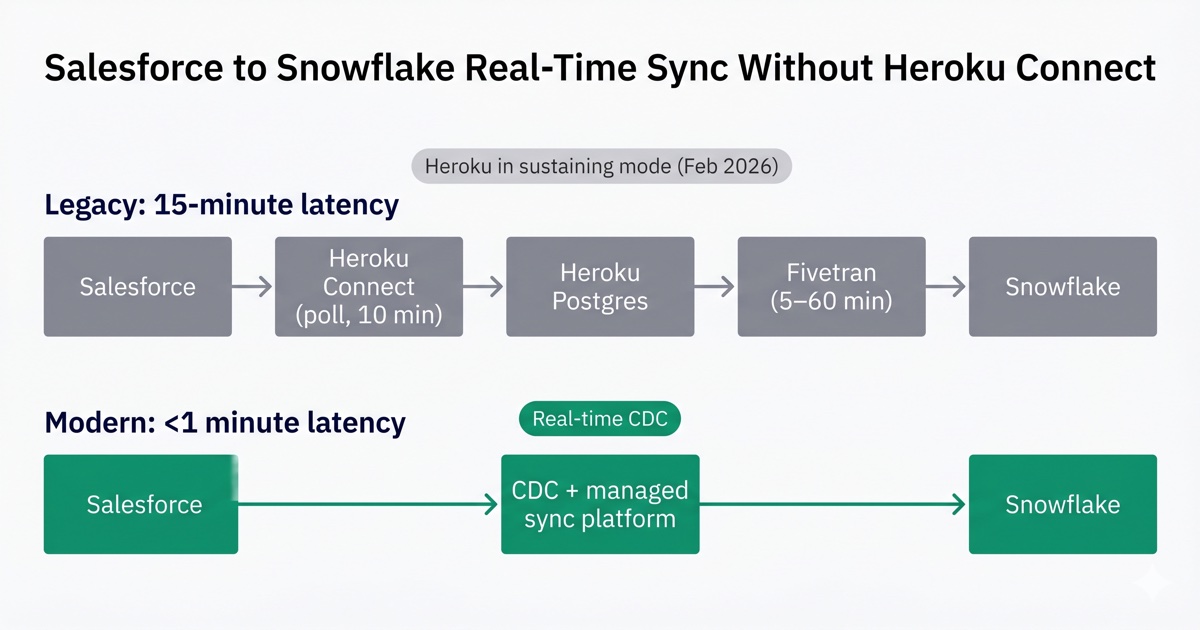
Salesforce to Snowflake Real-Time Sync Without Heroku Connect: A Direct Path for RevOps and Analytics Teams
Heroku Connect can't write to Snowflake. RevOps teams comparing Data Cloud zero-copy, batch ELT, and real-time CDC for sub-minute Salesforce-to-Snowflake sync.
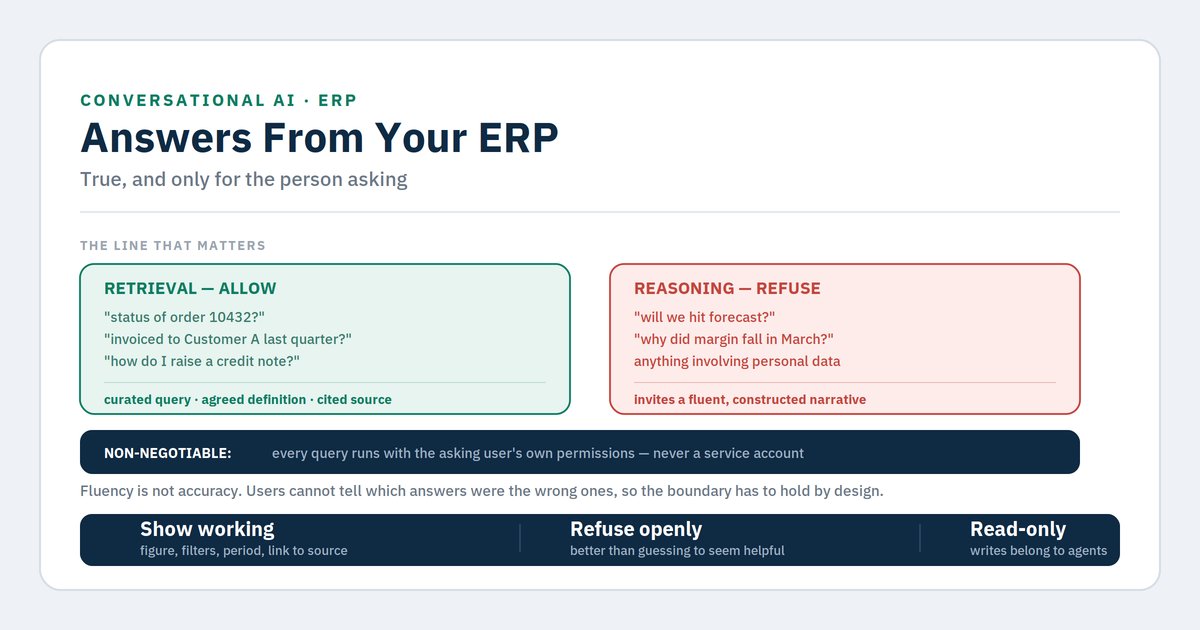
Internal chatbots for ERP data: grounding conversational AI
The hard part is not the conversation. It is that the answer has to be true, and only for the person asking.
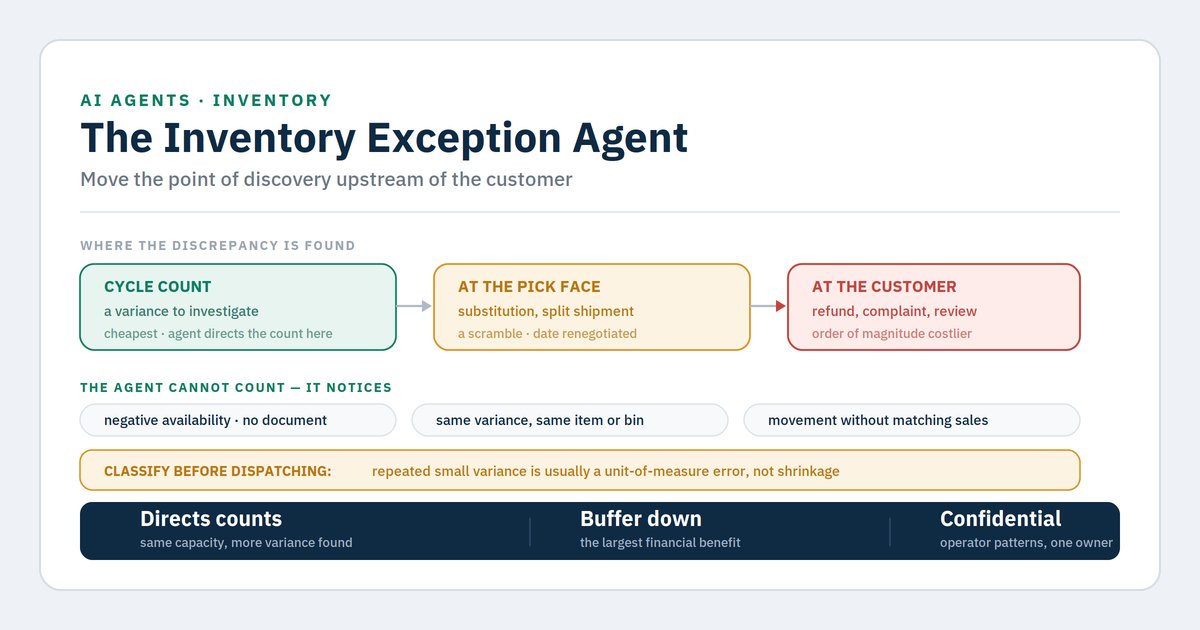
AI agent for inventory exceptions and stock discrepancies
A discrepancy found at the pick face is an operational annoyance. The same one found at the customer is a refund, a review and a lost account.
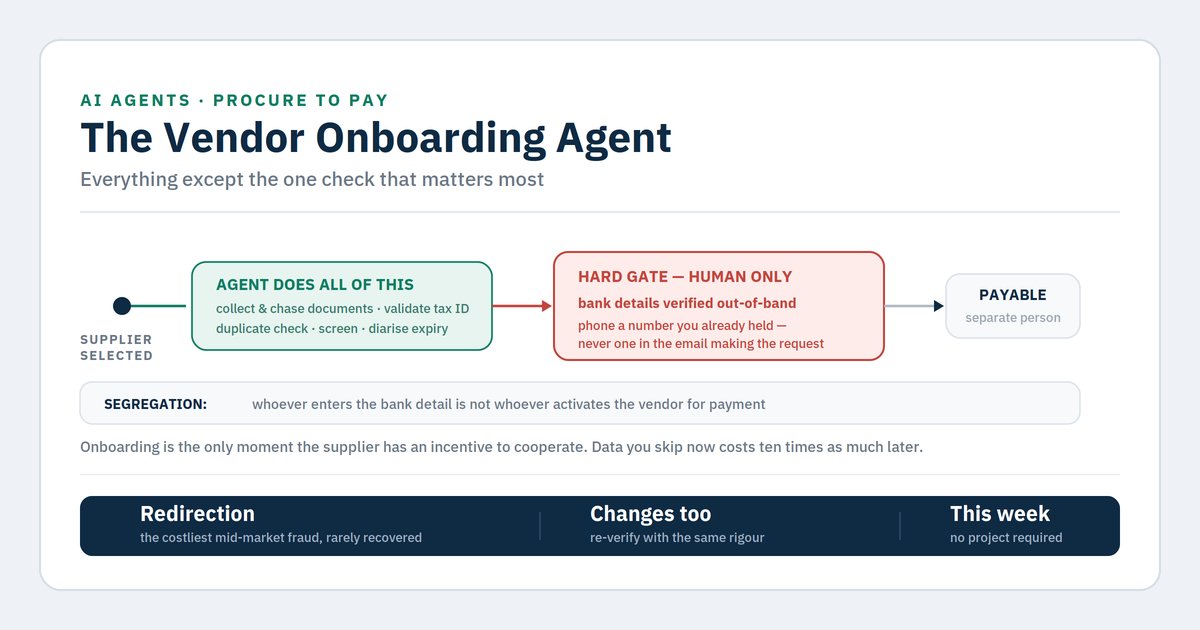
AI agent for vendor onboarding: data and fraud checks
Onboarding is the only moment you have leverage over a supplier's data quality. Most companies spend it chasing a PDF.
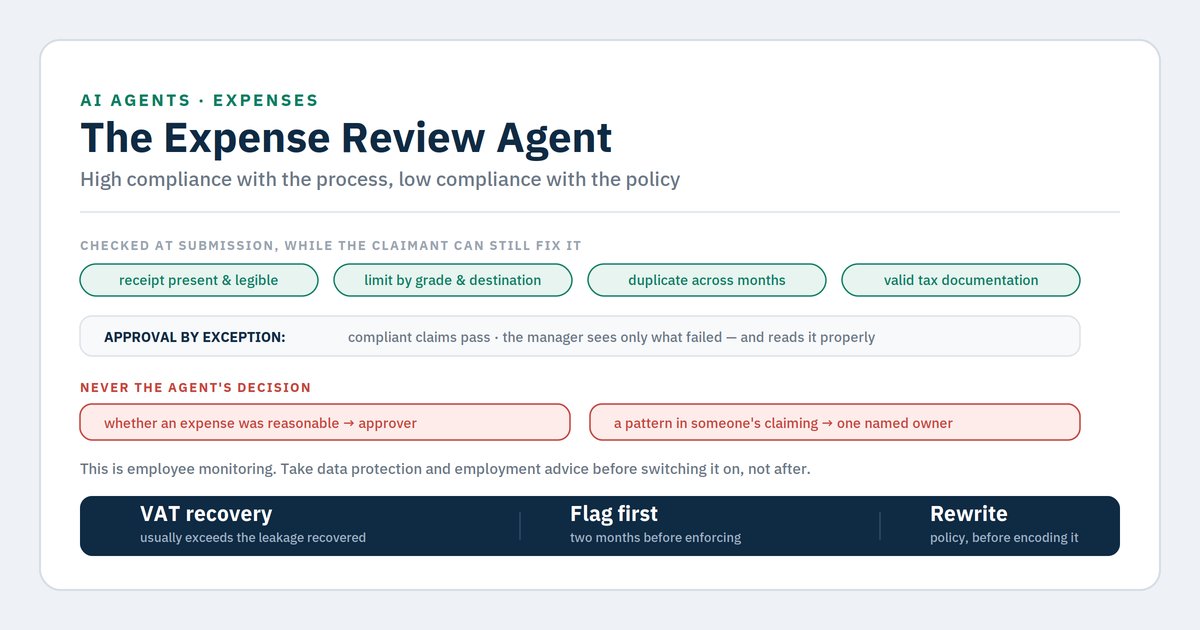
AI agent for expense review: policy checks and receipts
Most expense review is theatre. The agent's job is to make the remaining part real.
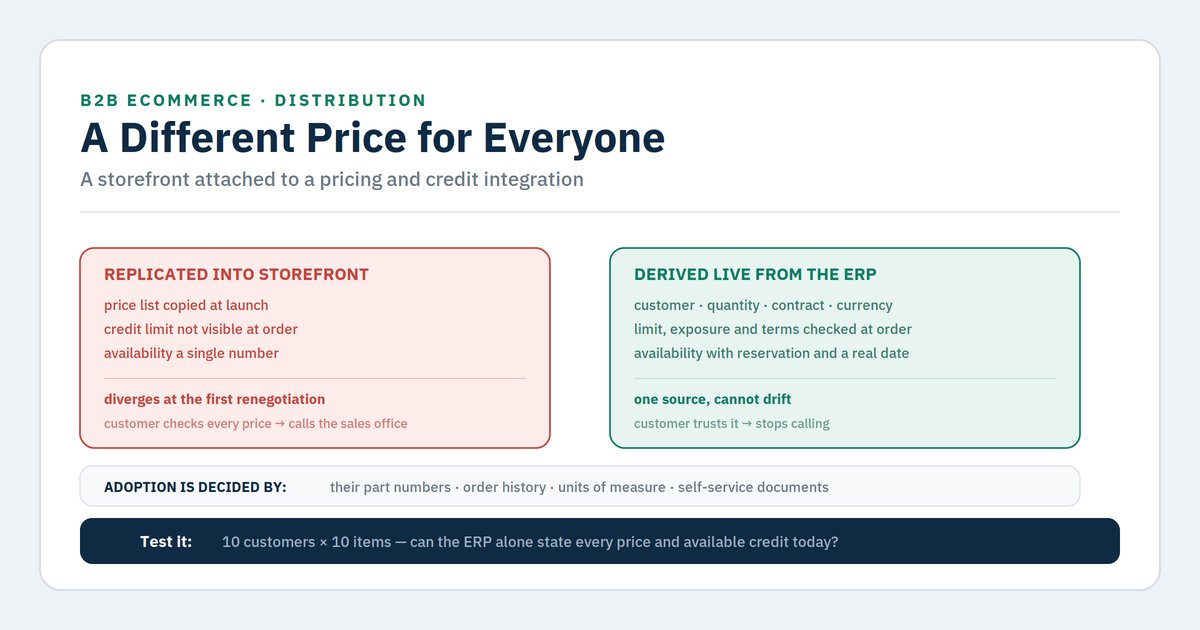
B2B ecommerce for distributors: pricing and credit limits
A consumer storefront shows one price to everyone. A distributor's storefront has to show a different one to every customer, and be right.
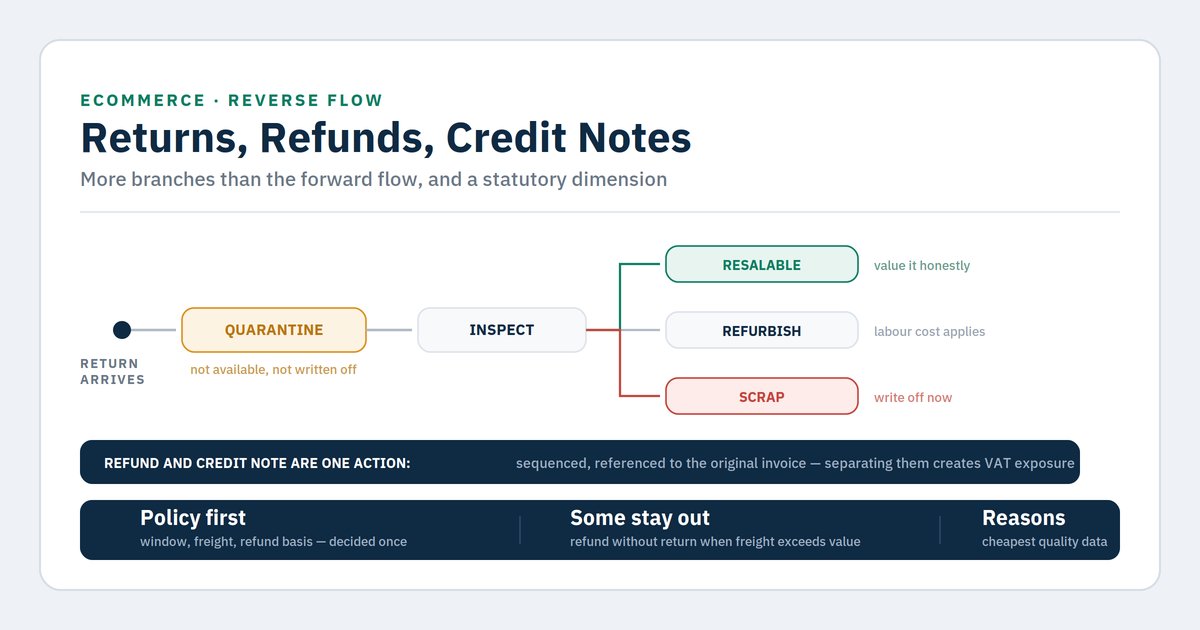
Returns, refunds and credit notes in ecommerce and ERP
Forward order flow gets designed. The reverse flow gets discovered in the first week of trading.
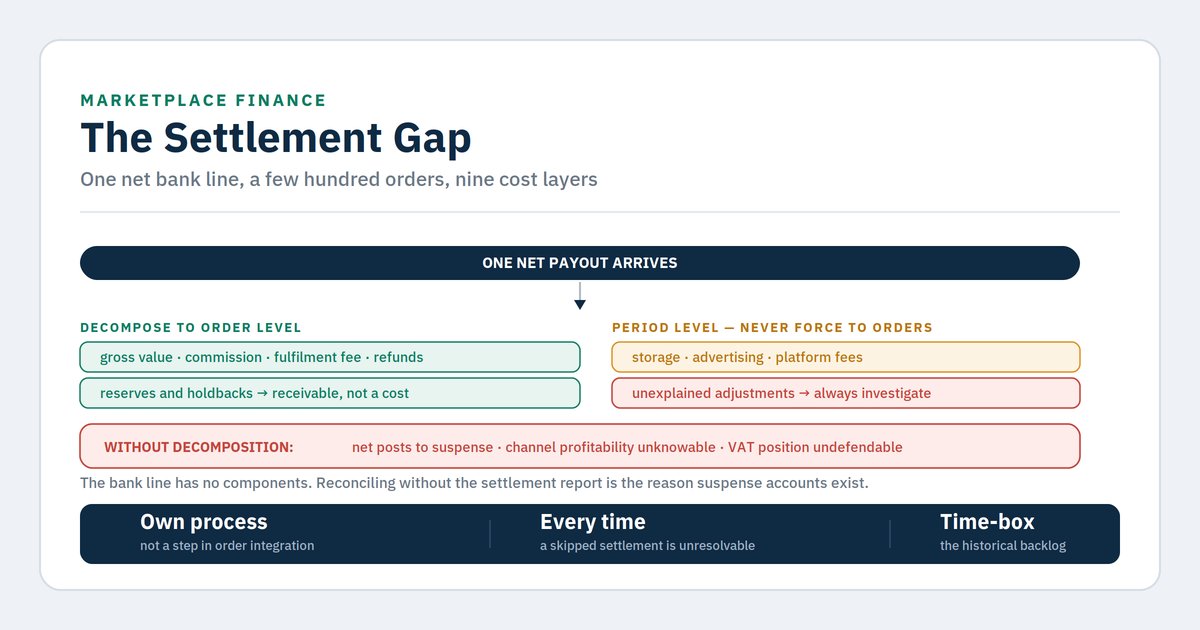
Marketplace settlements: reconciling payouts and orders
The order integration was the easy half. The money arrives in a different shape entirely.
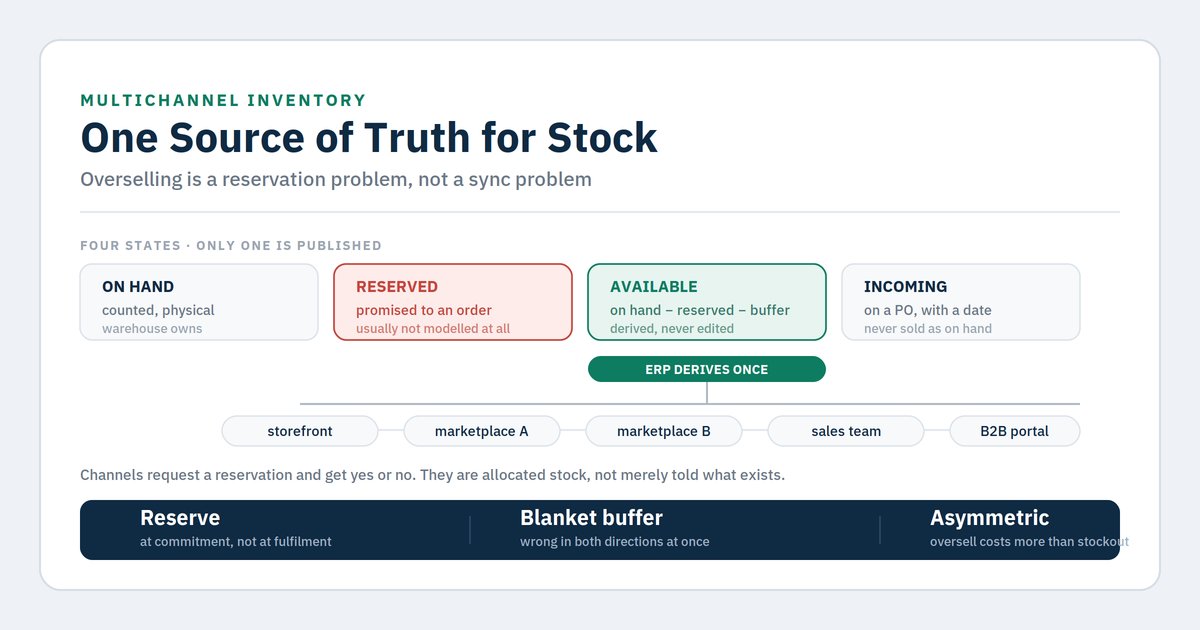
Inventory accuracy across channels: one source of truth
Overselling is not a data problem. It is a reservation problem wearing a data problem's clothes.
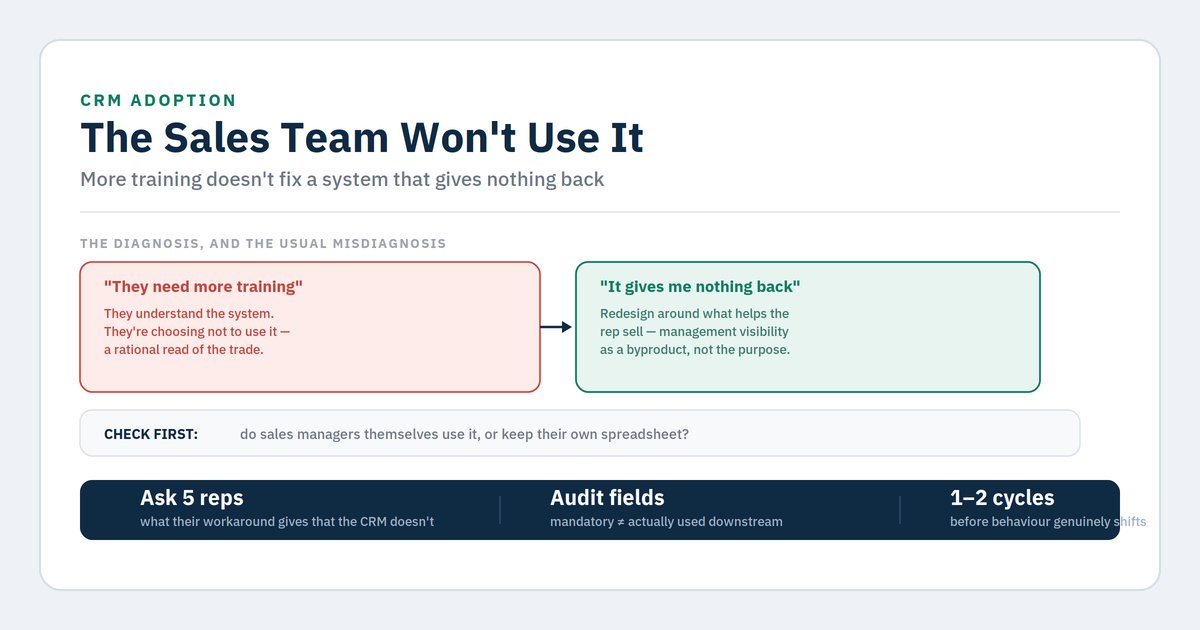
CRM adoption: why sales won't use it and how to fix it
More training does not fix a CRM sales won't use, because training was never the actual gap.
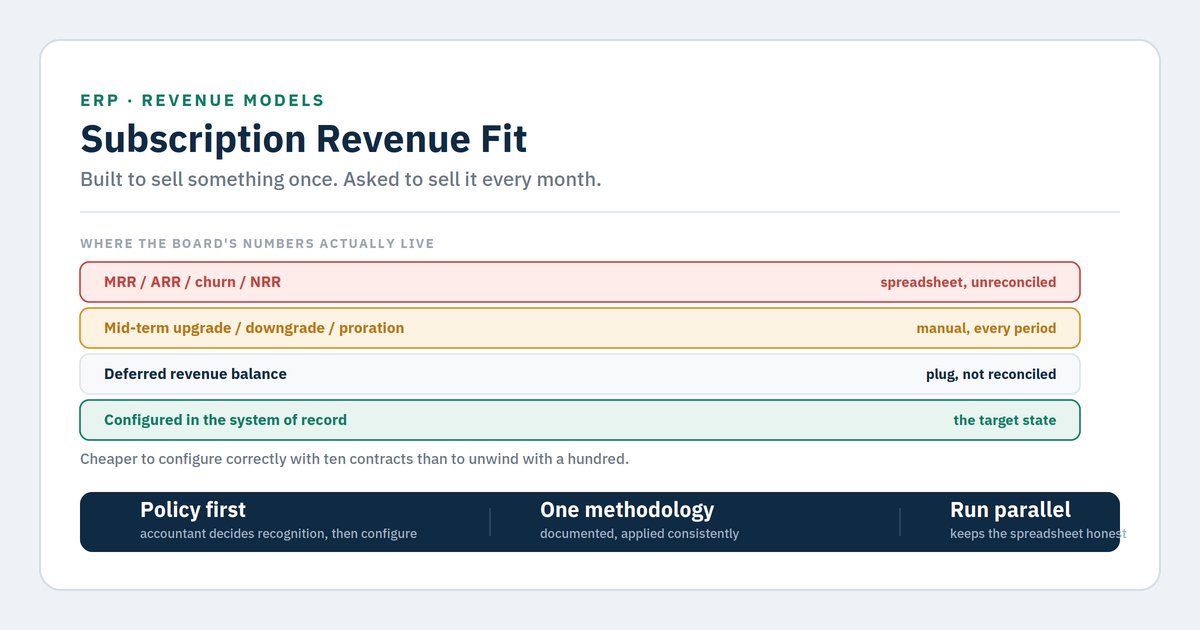
Subscription and renewal revenue in a product-company ERP
An ERP designed for selling things once will not naturally understand a business that sells the same thing every month.
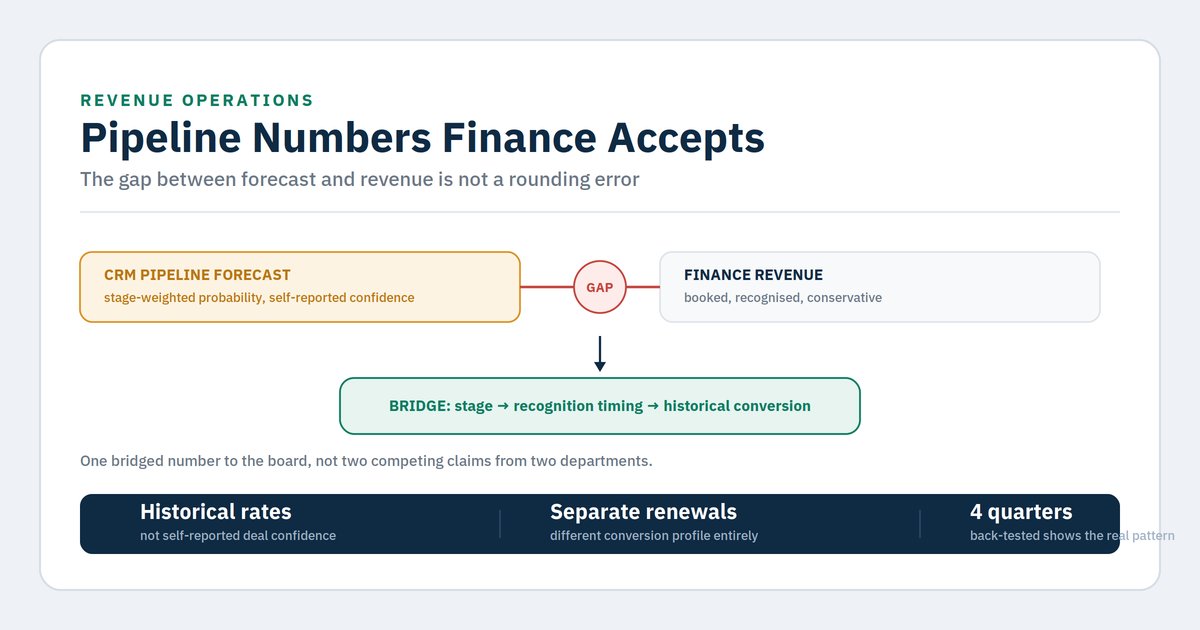
CRM forecast vs ERP revenue: closing the pipeline gap
Sales forecasts what it hopes. Finance reports what happened. The gap between them is not a rounding error.
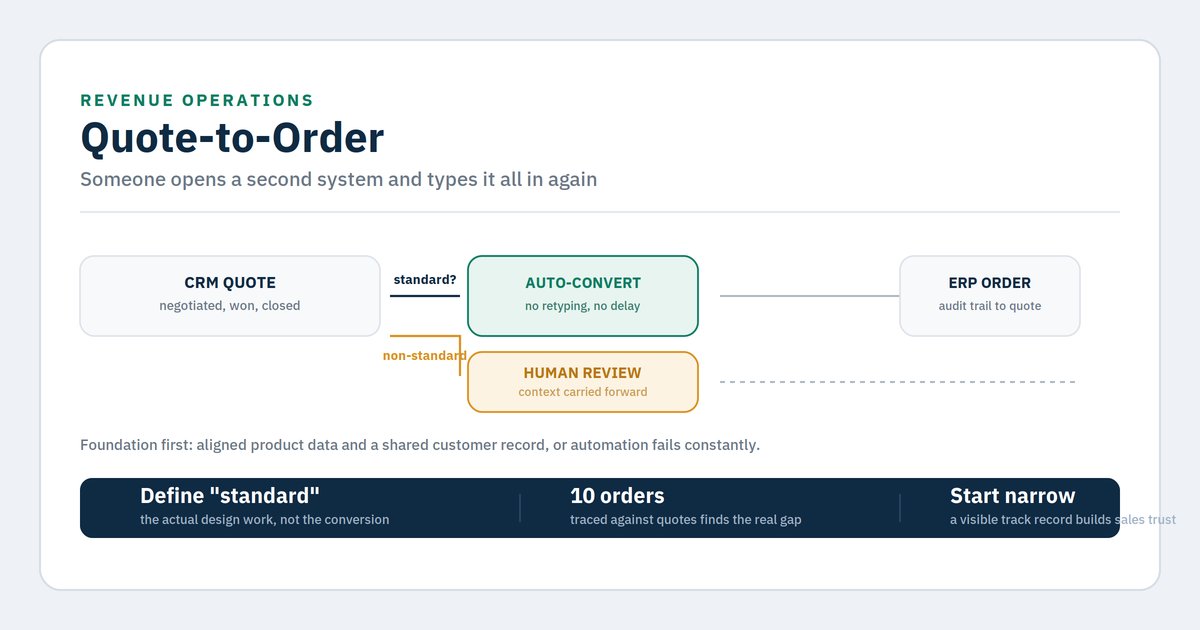
Quote-to-order handoff: CRM to ERP without retyping
The moment a quote becomes an order, someone in most companies opens a second system and types it all in again.
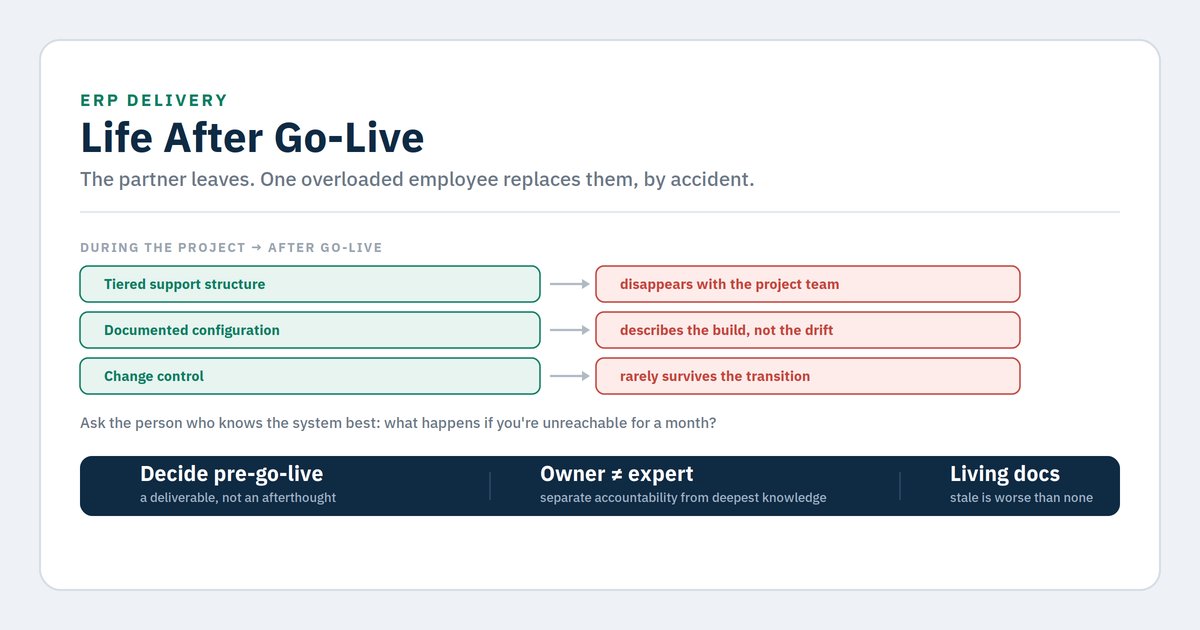
ERP support after go-live: a model beyond one key person
The implementation partner leaves. What replaces them is usually one overloaded employee, by accident.
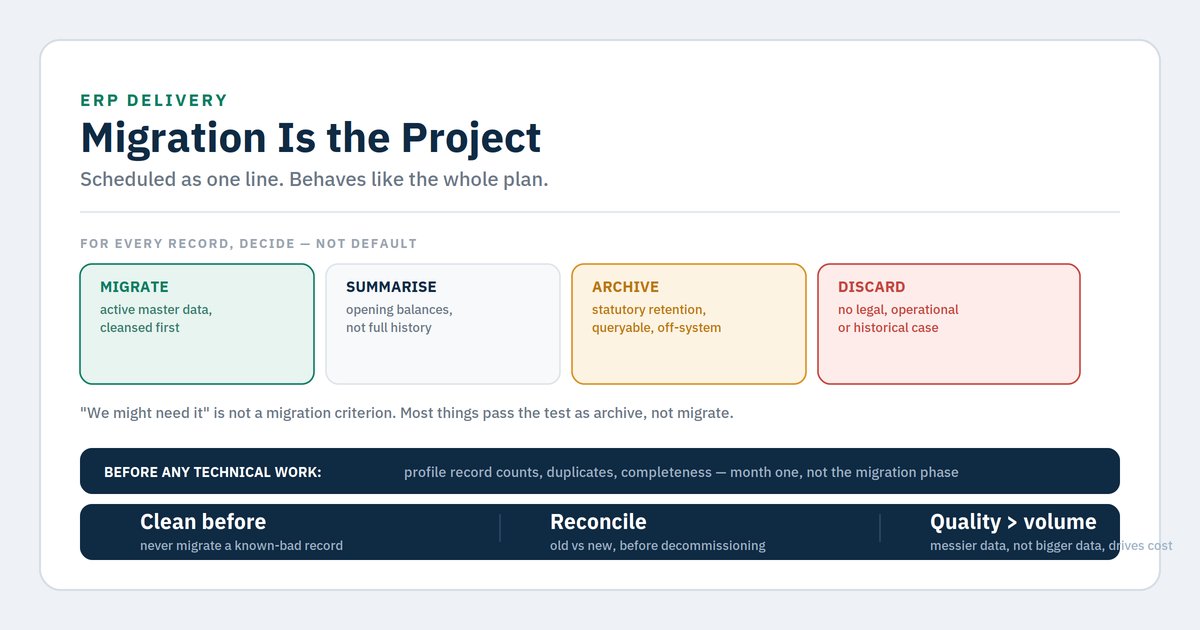
ERP data migration: what to clean, archive and leave behind
Migration is scheduled as one line on the plan. It behaves like the plan.
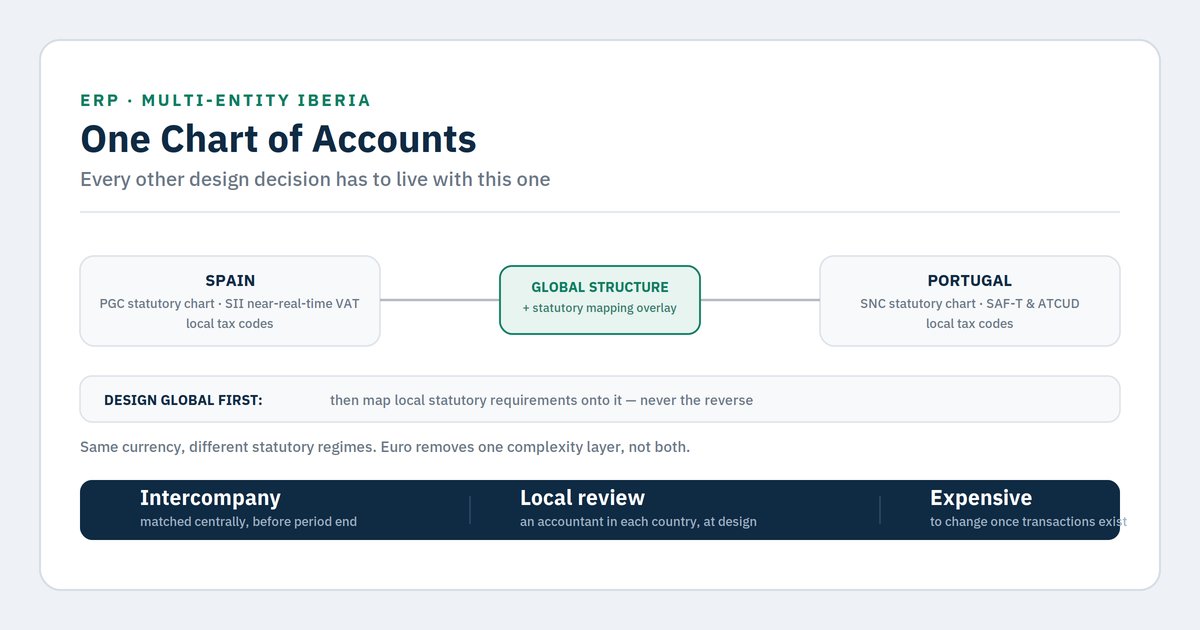
Multi-subsidiary ERP: one chart of accounts, many currencies
The chart of accounts is the one design decision every other decision has to live with.
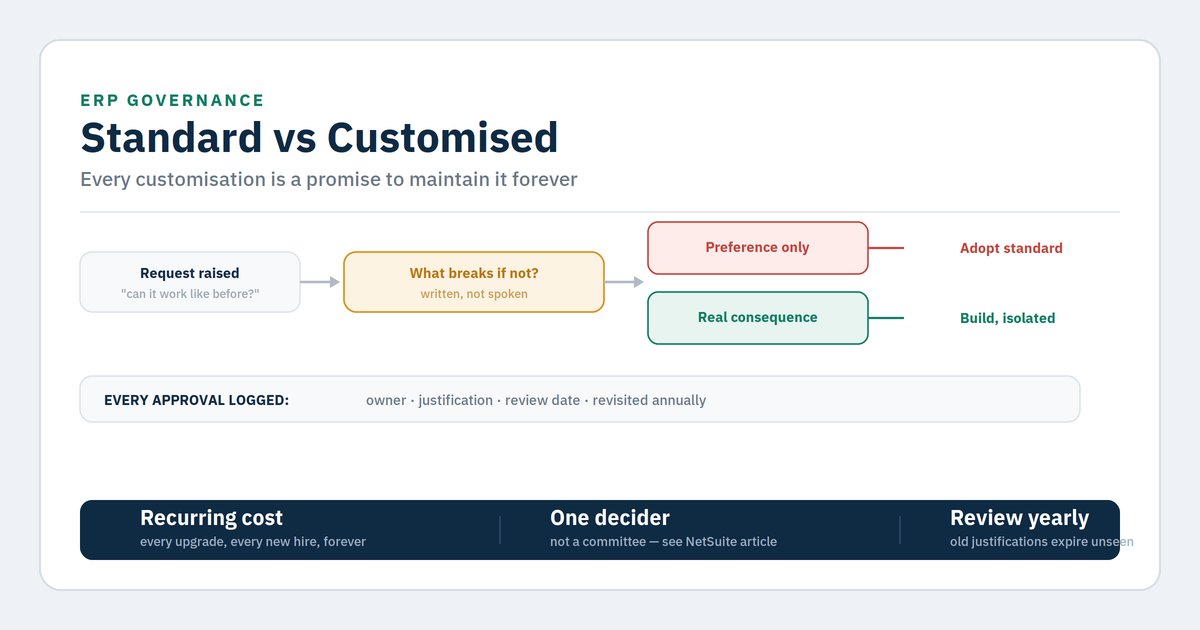
Standard vs customised ERP: when to configure or script
Every customisation is a promise to maintain something forever. Most requests are not worth the promise.
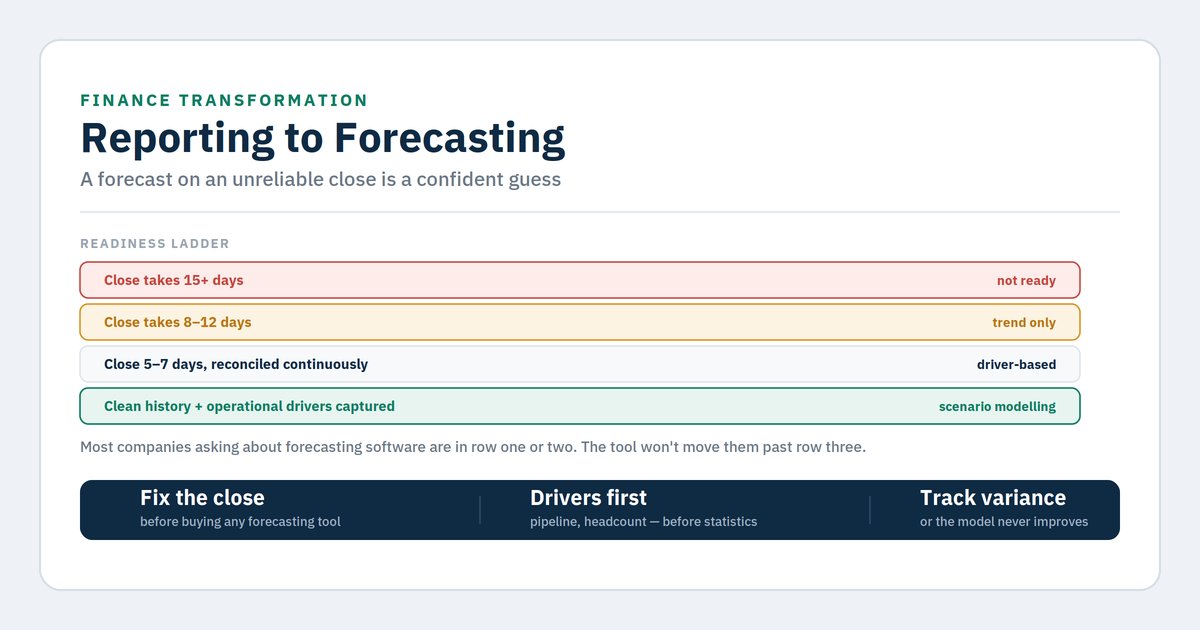
From reporting to forecasting: what finance needs first
A forecast built on an unreliable close is a confident guess, not a forecast.
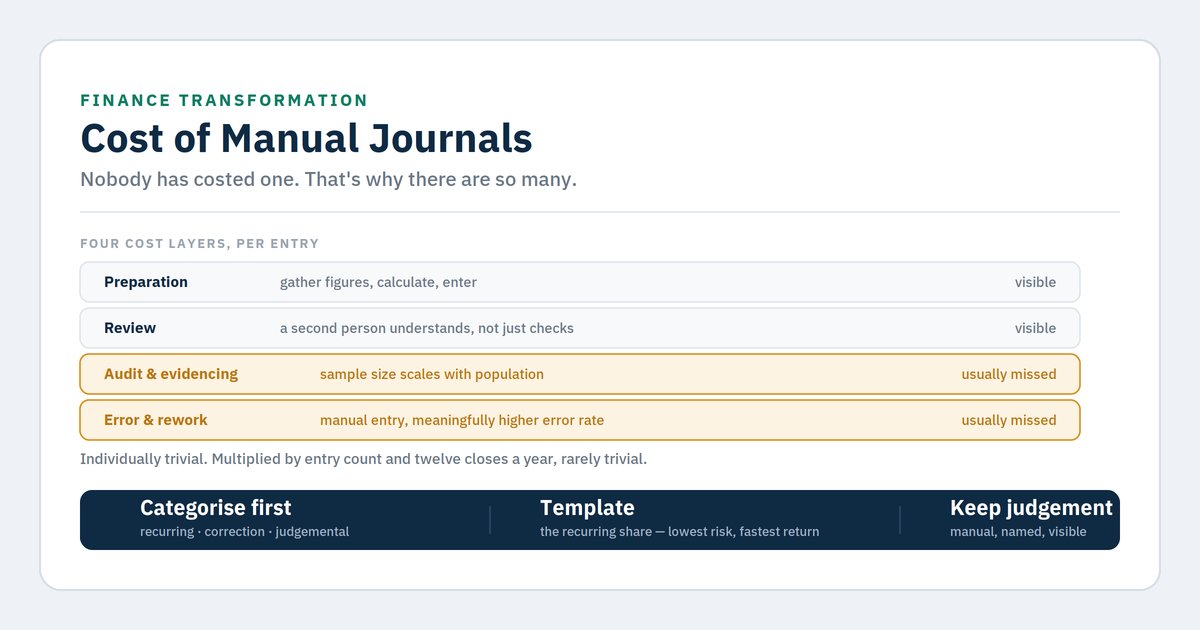
Manual journal entries: the real cost for finance teams
Nobody has ever costed a journal entry. That is exactly why there are so many of them.
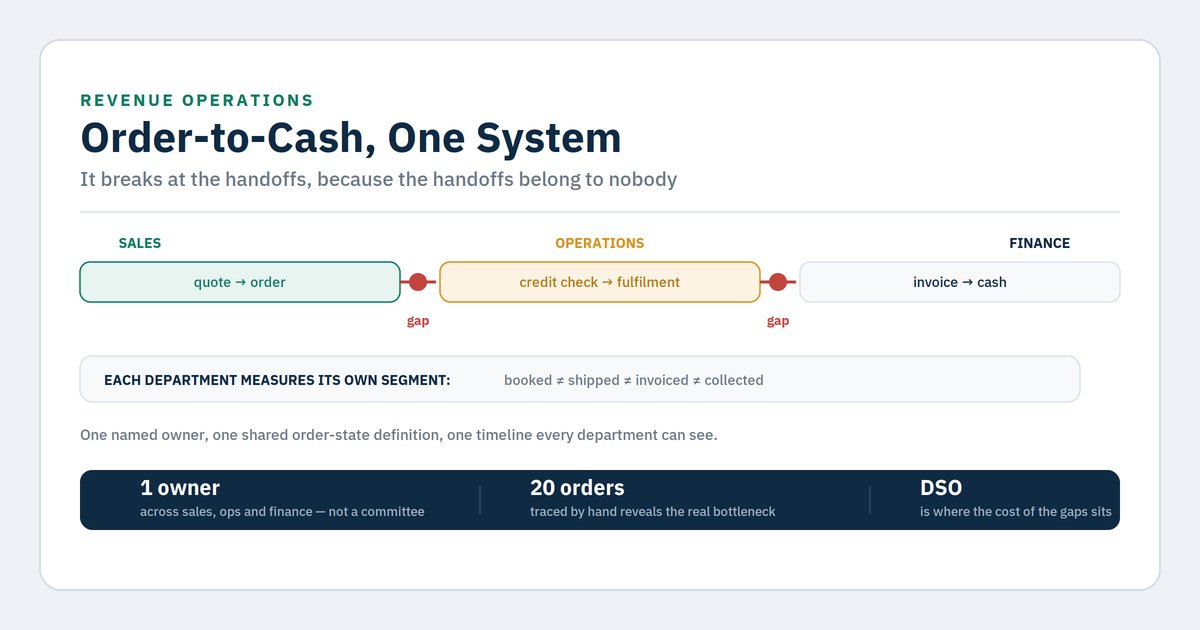
Order-to-cash as a single system: who owns the numbers
Nobody owns order-to-cash, which is exactly why it breaks between every department that touches it.
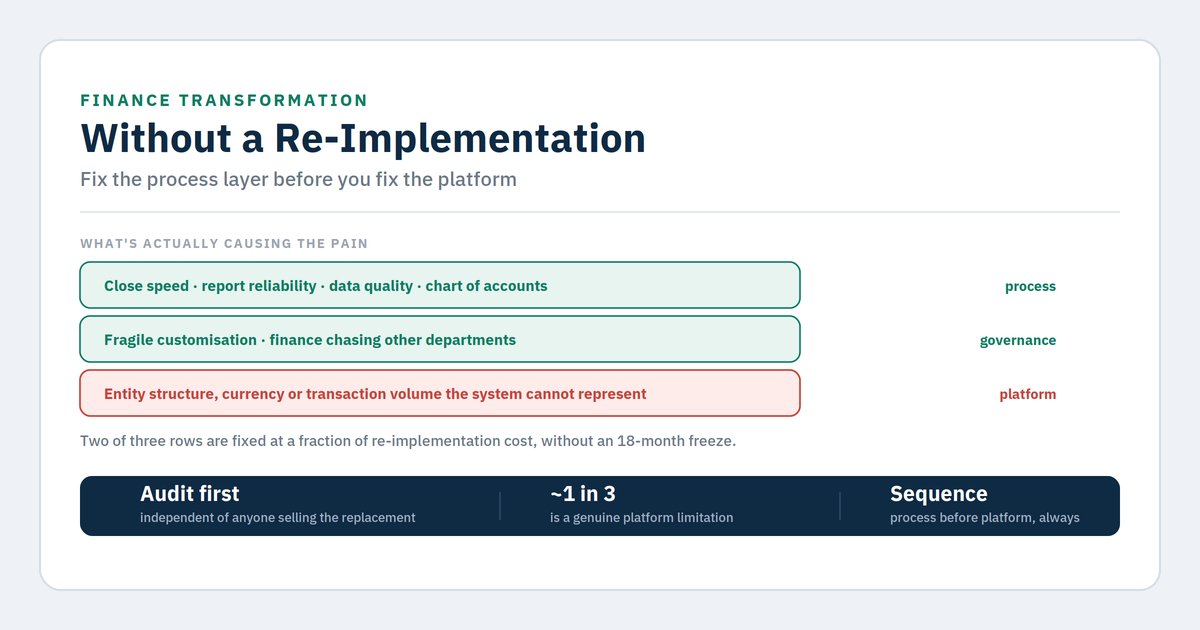
Finance transformation without an ERP re-implementation
Most of what a CFO wants from transformation is available before the next ERP project, not after it.
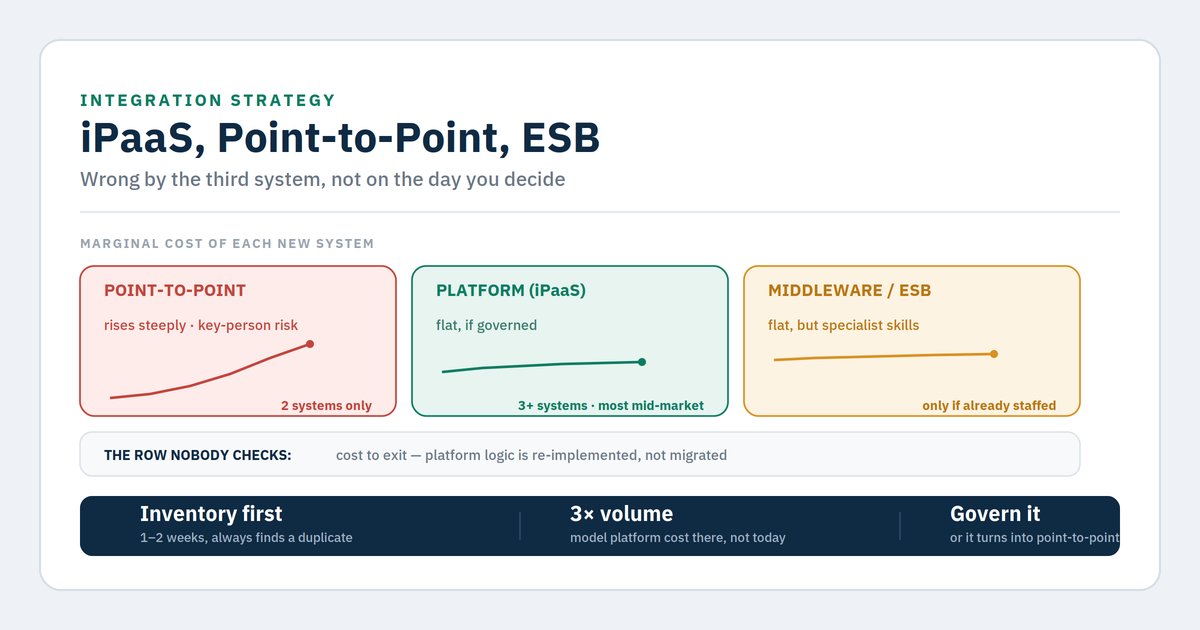
iPaaS vs point-to-point vs middleware: how to choose
Integration decisions are rarely wrong on the day they are made. They are wrong by the third system.
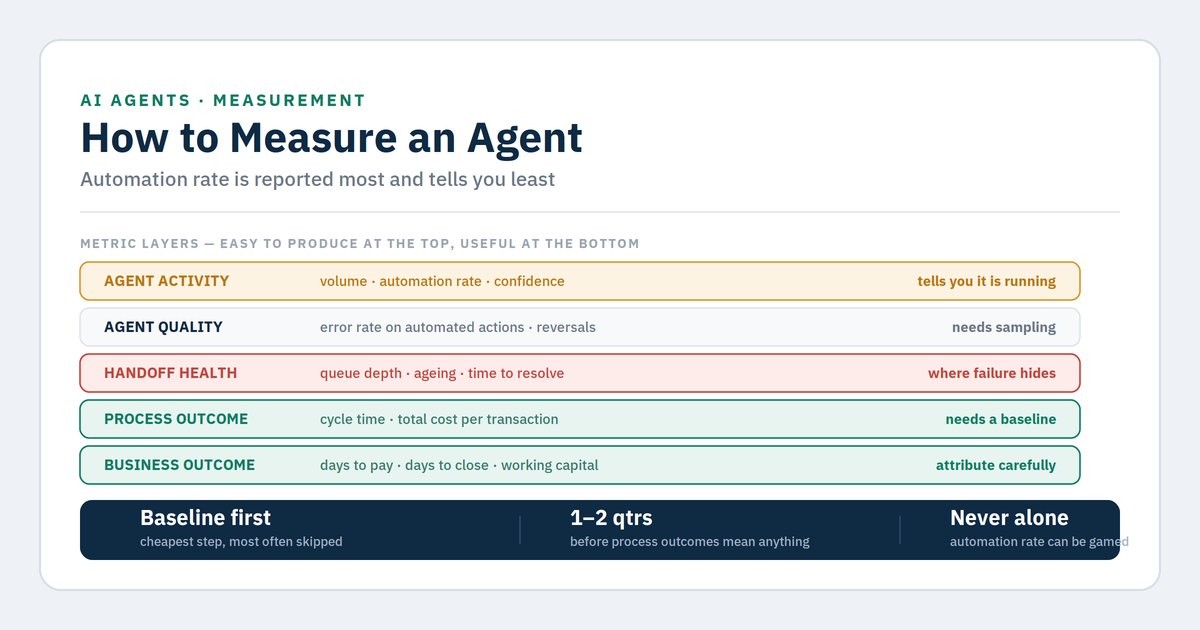
How to measure an AI agent: the metrics that matter
Automation rate is the metric most often reported and the one least likely to tell you anything.
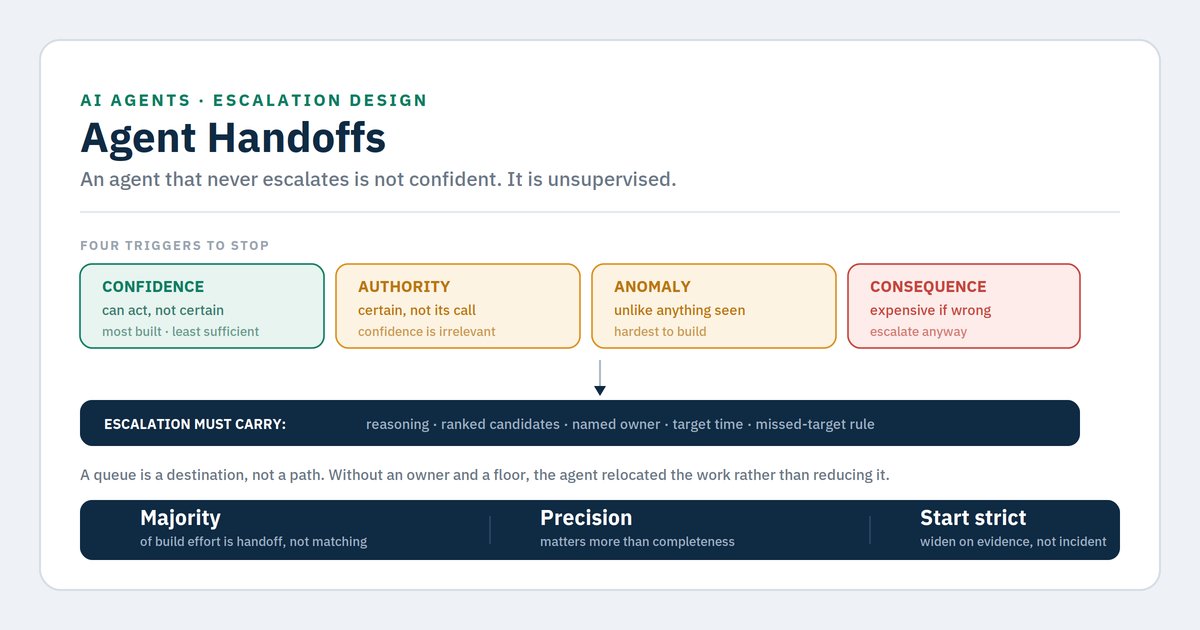
AI agent handoffs: designing escalation to a human
An agent that never escalates is not confident. It is unsupervised.
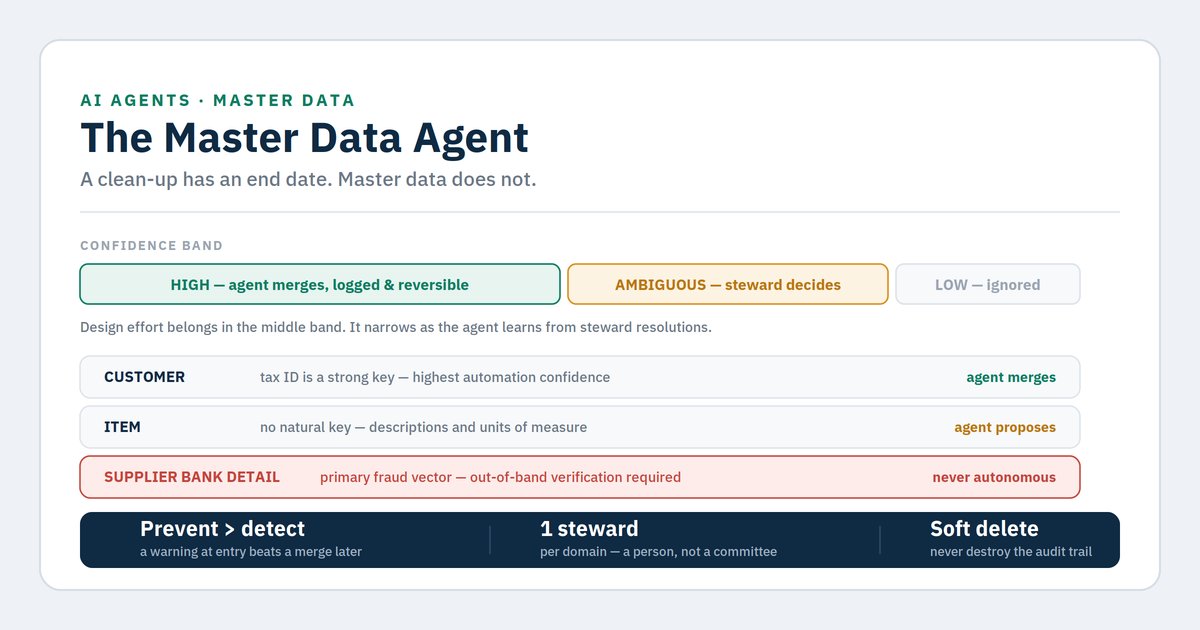
Master data agent: keeping ERP and CRM records clean
A de-duplication project has an end date. Master data does not.
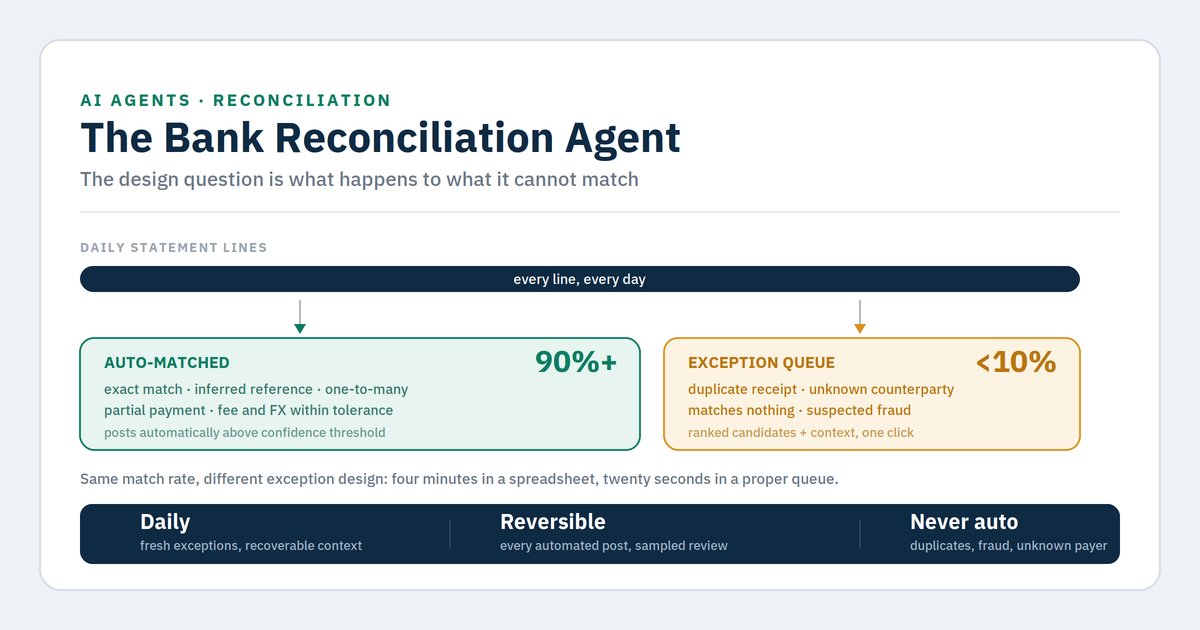
Bank reconciliation agent: statement matching at scale
The interesting design question is not what the agent matches. It is what it does with what it cannot.
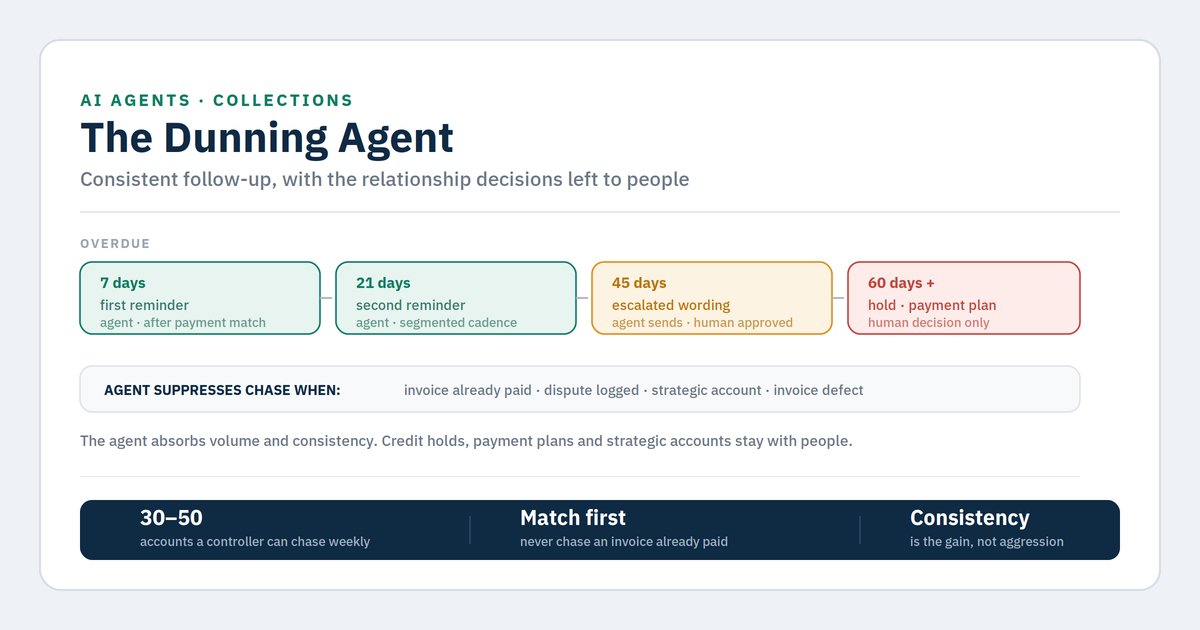
Dunning agent: automating collections follow-up with AI
Collections is the only finance process where doing it faster can cost you the customer.
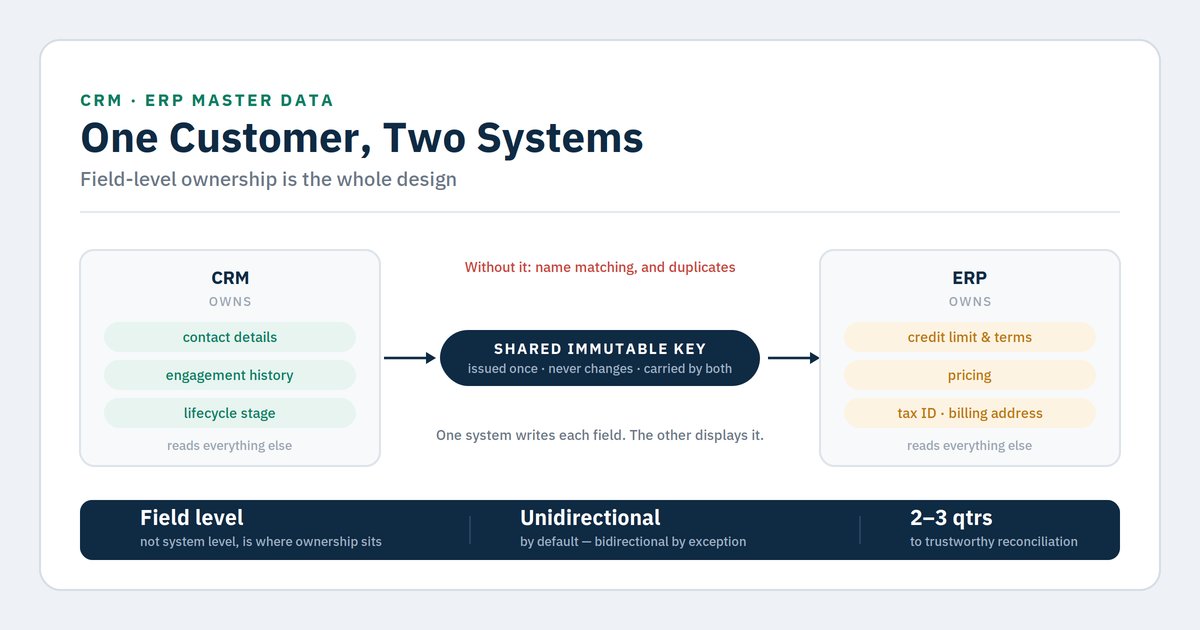
CRM–ERP sync: why one customer record breaks in 2 systems
Bidirectional sync is not a setting. It is a series of decisions about who is allowed to be right.
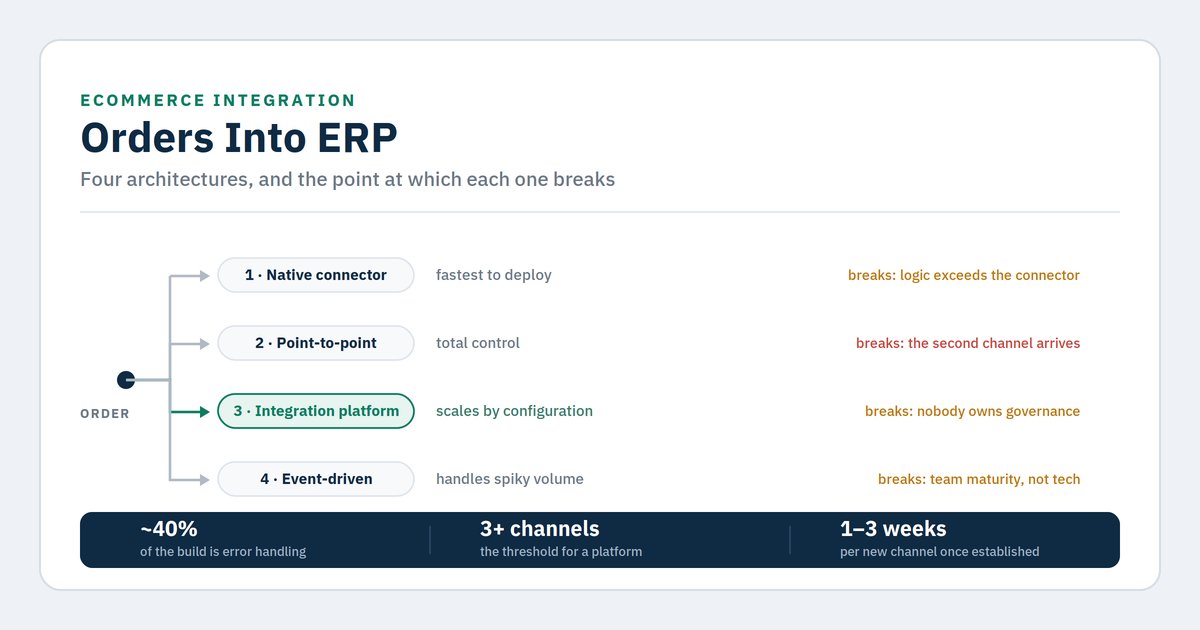
Ecommerce orders into ERP: 4 integration architectures
Every one of these works at some volume. The question is which one breaks first at yours.
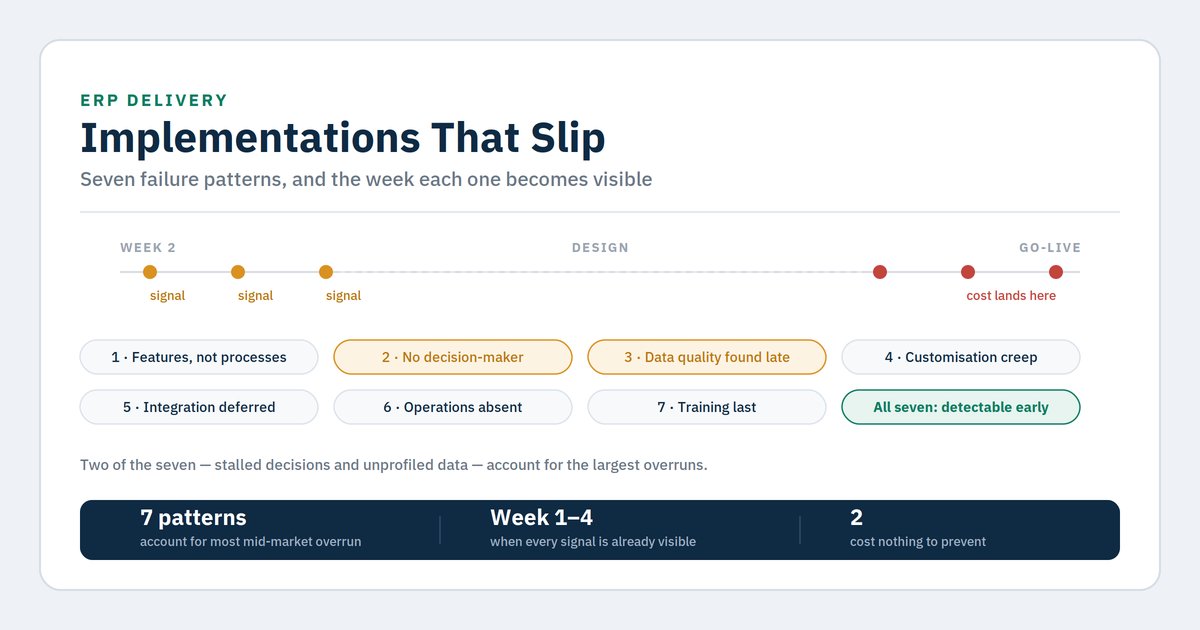
NetSuite implementations that slip: 7 failure patterns
Almost no ERP project fails for technical reasons. It fails for reasons that were visible in week three.
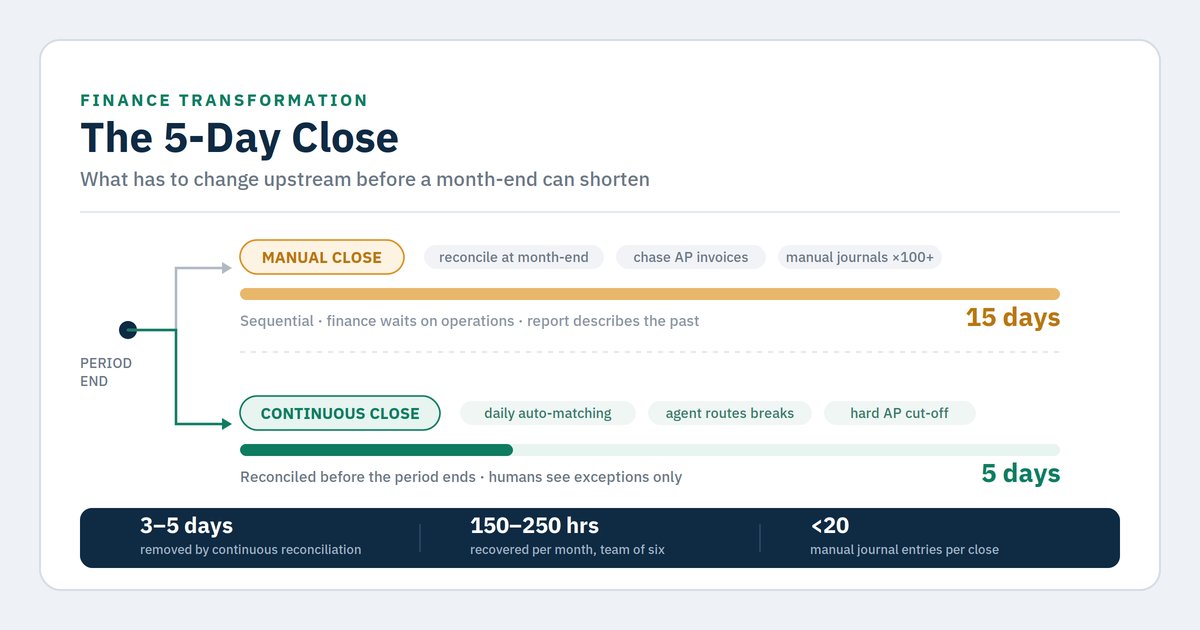
Month-end close in 5 days: what actually has to change
Shortening a close is not a reporting project. It is an operations project that ends in a report.